Microchipping and pet registration
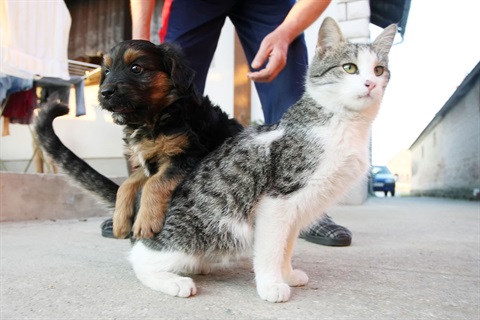
Microchipping
A microchip is a permanent form of electronic identification implanted under the pet’s skin by a vet or private implanter. It is important to know it does not track the pet. When a dog or cat is microchipped in NSW it is recorded on the NSW Pet Registry along with details of your pet and contact details of the owner.
If a pet ever goes missing it can be scanned by a vet or Council Ranger to find the owners details and enable the animal to be returned home safely. It is the breeder's responsibility to have puppies and kittens microchipped by 12 weeks of age or at point of sale, whichever is the earliest.
If your pet is not microchipped, make an appointment with your vet. The vet will scan your pet to check for a microchip, and if no microchip is found, they will implant a microchip (fees apply) and enter the number on to the register together with pet and owner details. If a microchip is found, they will complete a Verification form (M1) for you to supply to Council.
If your pet has come from another state, it may not be on the NSW Pet Registry. Take your pet to a vet and they will verify the microchip number and complete a Verification form (M1) for you to supply to Council.
Registration
Registration is due at 12 weeks of age and is a lifetime registration in NSW.
- Pension discount : If you have a Commonwealth issued Pensioner concession card please provide your card for a reduced registration fee. This includes a DVA card, but does not include health care cards.
-
- Breeders: If you intend on breeding with the animal and have a Breeders Card with a prefix (see image, right), please provide your card and a statutory declaration advising that you intend to breed with the animal.
- Working animals: To register a working dog(s) please provide a statutory declaration advising that the dog(s) is kept on land rated as 'farmland' and engaged as a working dog (see Working animals).
- Assistance animals: Please provide a medical certificate, proof of training and a public access test (visit Assistance animals (NSW Office of Local Government).
Registration fees can be paid online at the NSW Pet Registry or in person at Council's Customer Service Centres.
Approved Rehoming Organisations: If you have a dog or cat that you adopted through an approved rehoming organisation, you may be entitled to free registration. Please provide your rehoming documentation for eligibility. To see the list of approved rehoming organisations, please see Special variation guidelines (NSW Office of Local Government).
Changing ownership or pet details
If you are changing address or contact details, complete the Update your details form (C3C).
If you are selling or giving away a dog or cat, you can change ownership either by creating an online profile on the NSW Pet Registry and transferring to the new owner or completing a Change of Owner form (C3A) and submitting to Council in person at Council's Customer Service Centres or email to petrego@tweed.nsw.gov.au.
If you are the new owner of a dog or cat you will need to create an online profile on the NSW Pet Registry to link your pet. Once signed into the Pet Registry if you do not see your pet's profile, click 'link my pet' and enter your pet's microchip number. If your pet still doesn't appear this may be because the pet isn't in your name, may be registered at a different address or not on the register yet. Please contact Council at petrego@tweed.nsw.gov.au or call 02 6670 2400 and follow the prompts to 'dog and cat registration'.
If your pet dies you must update the NSW Pet Registry or notify Council in writing.
Do I need to Desex my pet
Where a cat or dog is not desexed by the recommended age (6 months for dogs, 4 months for cats) an additional fee (dog) or permit (cat) is required.
Your vet may recommend you delay desexing or avoid it entirely for medical reasons, they can record this by flagging it directly on the NSW Pet Registry. They may, alternatively, give you a letter to give to Council to flag the register for delayed desexing. They must do this prior to your pet reaching the recommended desexing age. If your vet has provided you with a temporary exemption, you must have your pet desexed by the date stated by the vet to avoid the additional registration fee or annual permits.
Working animals

A working dog is defined as a dog used for droving, tending, working or protecting stock (including a dog being trained as a working dog). Hunting dogs and guard dogs are not working dogs under the Companion Animals Act 1998.
Working dogs kept on land rated as farmland do not have to be microchipped or registered, however it is recommended. If the dog is microchipped, it must be registered (no fee). When registering, you must provide a signed statutory declaration as proof the animal is a working dog. A list of the dog's duties, microchip number and breed of dog must be included. Council may also visit the property to witness the dog working.
If your working dog is not kept on farmland, it must be microchipped and registered.
Breeder information
Breeders are encouraged to make an online profile on the NSW Pet Registry. A breeder can then use their Breeder Identification Number (BIN) to easily enter litters online ready for microchipping through a vet, and then transfer kittens and puppies to new owners, or a Change of Owner form (C3A) can be submitted to Council in person at Council's Customer Service Centres or email to petrego@tweed.nsw.gov.au.
For more information, visit the Office of Local Government Registering a breeding animal page.
It is the breeders responsibility to change ownership into the new owners name.
The NSW Government provides information for breeders.
Annual permits
Annual permits
An annual permit is required for the following:
A late fee applies if not paid for within 28 days of an annual permit is due.